
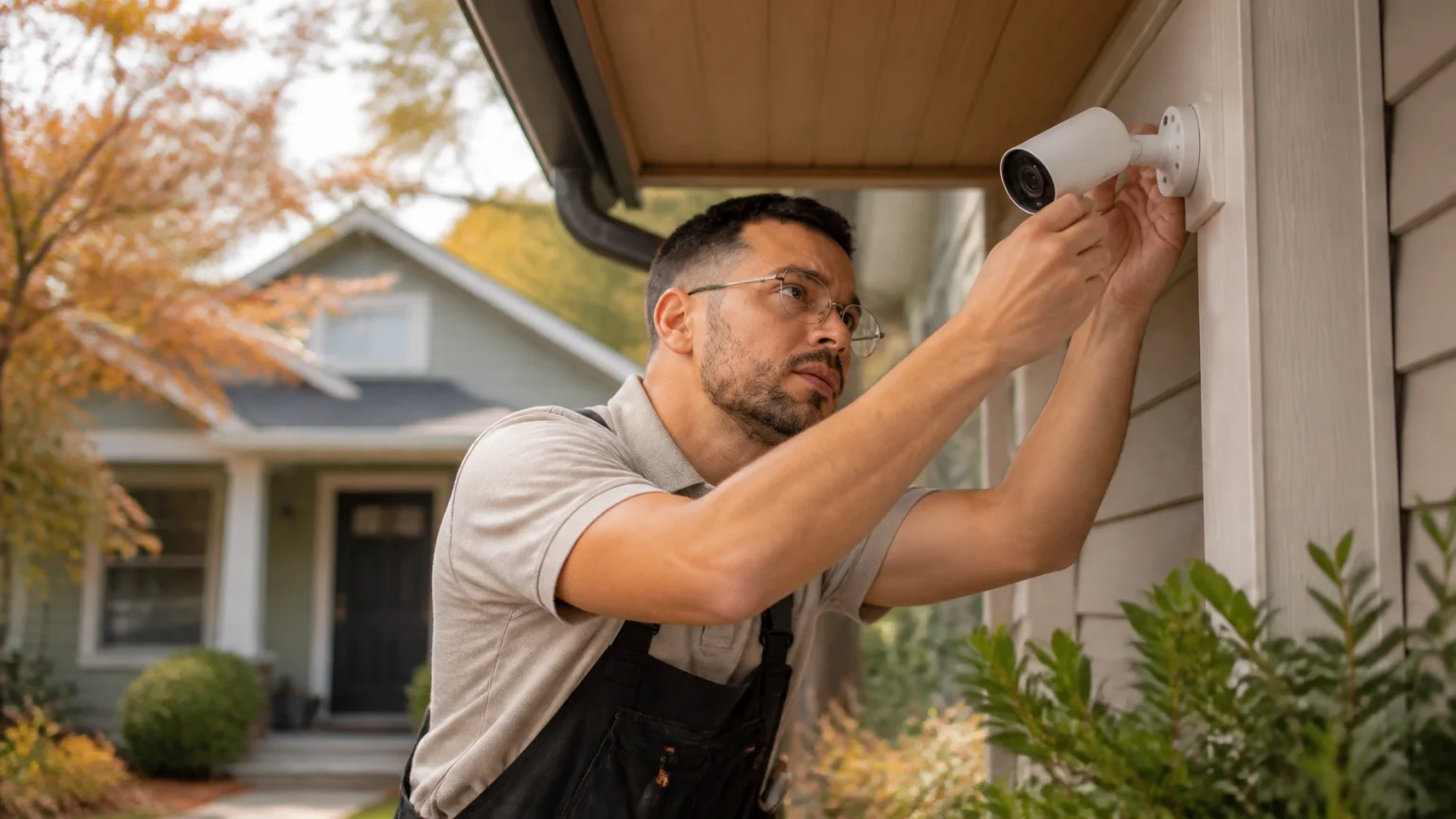
Fall is an ideal time to reassess your home’s security. Shorter days, changing routines, increased deliveries, and upcoming holiday travel can all create new vulnerabilities around your property.
A professionally installed surveillance camera system can provide greater visibility, timely alerts, and valuable peace of mind. It can also help you document package theft, property damage, or unusual activity when you are not at home.
But how do you know whether your home truly needs one?
Here are five clear signs that it may be time to explore surveillance camera installation: plus practical guidance for planning a safe, privacy-conscious setup.
1. Your Entrances And Delivery Areas Feel Exposed
Your front door is not the only area worth monitoring. Back doors, garages, side entrances, patios, driveways, and first-floor windows can all become blind spots without the right coverage.
If you regularly receive packages, food deliveries, or visitors, a camera positioned near your front entrance can help you:
- Check who is at the door before opening it.
- Monitor deliveries and pickup times.
- Document package theft or vandalism.
- Receive motion alerts while you are inside or away.
- Discourage opportunistic trespassing with visible security equipment.
A sensible starting point is to cover your front door, back door, and off-street windows. From there, consider the driveway, garage, and any pathway that leads toward the home.

A camera should provide a clear view without being obstructed by porch décor, trees, railings, or seasonal decorations. It should also be positioned to avoid glare from direct sunlight or exterior lighting.
If you are unsure where the most effective viewing angles are, a surveillance camera professional can assess your property and recommend a tailored layout. You can browse surveillance camera services on Jobsido to compare available experts, pricing, reviews, and availability.
2. You Are Away From Home More Often
A home can feel secure when everyone is inside. The challenge begins when work, school, travel, or family commitments leave it empty for long periods.
If your household is away more often this fall, a surveillance camera can help you maintain awareness without constantly asking a neighbour to check the property. Depending on the system, you may be able to:
- View a live feed through a mobile app.
- Receive person or motion detection alerts.
- Review recorded clips after an event.
- Use two-way audio at selected entry points.
- Check on your property while travelling.
This is particularly useful for homeowners who travel over long weekends, families managing busy schedules, and anyone who wants a clearer view of activity around the home.
However, remote access is only valuable when the system is properly configured. Your installer should test Wi-Fi strength, camera positioning, notification settings, night vision, and recording storage before completing the job.
A professional installation also reduces the risk of placing a camera where its signal is weak or where its view is mostly blocked. According to Security.org’s installation guidance, it is wise to complete software setup and test connectivity before permanently mounting cameras. That approach makes troubleshooting easier and helps prevent unnecessary drilling or repositioning.

3. You Have Experienced A Security Incident Or Near-Miss
A recent break-in, attempted entry, damaged vehicle, missing package, or unfamiliar person near your property is a direct signal that your current security measures may not be sufficient.
You may also benefit from installation if:
- Someone has tried a door or window unexpectedly.
- Your vehicle or exterior property has been damaged.
- You have noticed repeated activity near a garage or side yard.
- You cannot confirm who accessed your home.
- Your existing camera is unreliable, poorly positioned, or outdated.
A surveillance camera cannot guarantee that an incident will never occur. It can, however, improve visibility and create a record of activity. Visible cameras may also help deter some opportunistic criminal behaviour, particularly when paired with motion lighting and clear signage.
The system should be designed around your home’s actual risks rather than an arbitrary number of cameras. A professional can help determine whether you need a doorbell camera, outdoor perimeter coverage, indoor common-area monitoring, or a more comprehensive wired system.
When comparing local professionals, look for clear service descriptions, transparent pricing, responsive communication, and verified customer feedback. Jobsido surveillance camera listings include professionals with ratings such as 4.7 and 5.0, giving customers a useful starting point for evaluating the perfect fit.
4. Your Property Has Natural Blind Spots
Every property has areas that are difficult to see from inside the home or from the street. These may include:
- A long or curved driveway.
- A side yard hidden by fencing or landscaping.
- A detached garage, shed, or workshop.
- A rear patio or basement entrance.
- A corner lot with multiple approach points.
- Dense shrubs near doors or windows.
Walk around your property during daylight and ask a simple question: Which areas could someone approach without being seen?
Then repeat the exercise after dark. Shadows, exterior lights, changing foliage, and seasonal weather can significantly affect visibility. A camera position that looks effective in September may be less useful once leaves fall or snow accumulates.
A professional installer can map coverage before mounting equipment. This planning process should consider:
- Field of view.
- Camera height.
- Night vision.
- Lighting direction.
- Wi-Fi or cable access.
- Weather exposure.
- Tamper resistance.
- Privacy boundaries.
Outdoor cameras are often mounted high enough to discourage interference, while still providing a useful angle for identifying activity. The exact height depends on the camera, structure, and viewing area. Your installer should also secure the equipment appropriately for the exterior surface, whether it is siding, brick, wood, or masonry.
If the project includes cable routing, power connections, or integration with an existing alarm system, professional support is especially valuable. You can also explore related home maintenance services on Jobsido when your security project involves broader exterior or electrical work.

5. You Want Better Security Without Compromising Privacy
Good surveillance protects your property while respecting the people around it. Camera placement matters just as much for privacy as it does for security.
As a general principle, keep cameras focused on areas you own or control, such as:
- Your front entrance.
- Your driveway.
- Your yard and walkways.
- Your garage.
- Your porch or patio.
- Common areas inside your own home.
Avoid deliberately aiming cameras into neighbours’ windows, private yards, bedrooms, bathrooms, or other spaces where people reasonably expect privacy. Indoor cameras should generally be limited to common areas and entry points, never bedrooms or bathrooms.
Audio recording can create additional legal concerns. Rules vary by province, state, and municipality, and some jurisdictions have stricter consent requirements for recording conversations. Before enabling a camera’s microphone, review local requirements and consider whether audio is genuinely necessary.
The LegalShield guide to outdoor home surveillance camera laws explains why homeowners should review local rules, respect reasonable expectations of privacy, and take extra care with audio recording. It also recommends clear signage where appropriate.
For a privacy-conscious installation:
- Identify the exact areas you need to monitor.
- Angle cameras toward your own property.
- Disable audio when it is not required.
- Use privacy masking features if your system provides them.
- Secure app accounts with strong passwords and multi-factor authentication.
- Post appropriate surveillance notices where required.
- Review who has access to recorded footage.
How To Prepare For Surveillance Camera Installation
Once you decide that your home needs better coverage, follow a simple process.
Search
Start by defining the service you need. Are you looking for a single outdoor camera, a multi-camera system, wired installation, wireless setup, or integration with an existing security system?
Then search Jobsido’s surveillance camera marketplace for professionals in your area. Review service details, customer ratings, pricing, and availability.
Schedule
Share practical information before booking, including:
- The number of cameras you are considering.
- Your preferred indoor and outdoor locations.
- Whether power or cable routing is required.
- Your Wi-Fi situation.
- Any privacy concerns.
- Whether you need app setup or system integration.
A clear brief helps the professional prepare and gives you a more accurate understanding of the work involved.
Complete
Before the installer leaves, confirm that:
- Every camera has a clear view.
- Live feeds work on your phone.
- Motion alerts are reaching the correct users.
- Night vision is functioning.
- Recording and storage settings are understood.
- Cameras are firmly mounted.
- Cables and power connections are secure.
- Privacy zones and audio settings are configured correctly.
Complete the work with precision, not simply speed. A camera that is poorly angled, disconnected, or constantly triggered by passing traffic will not deliver the reliable protection you expect.
Review
After installation, monitor the system for several days. Check whether alerts are useful, whether lighting affects image quality, and whether any areas remain uncovered.
If adjustments are needed, contact the professional promptly. Once the system performs as intended, leave a review describing the specific outcome: such as a smooth and stress-free installation, improved coverage, or clearer remote monitoring. Your feedback helps other homeowners find a trusted expert.
Find The Right Installation Support This Fall
If your entrances feel exposed, your routine keeps you away from home, you have experienced a security incident, your property contains blind spots, or you are concerned about privacy, surveillance camera installation may be a valuable fall priority.
The right system is not necessarily the largest or most expensive one. It is the system designed around your property, lifestyle, connectivity, and security goals.
Search for handpicked professionals, compare your options, schedule at a convenient time, and complete the installation with confidence. With the right expert, protecting your home can be straightforward, secure, and tailored to your needs.
Find surveillance camera installation services on Jobsido or browse all available services.
Note: Security camera and audio-recording laws vary by location. This article is general information, not legal advice. Check your local requirements or consult a qualified legal professional before installation.