
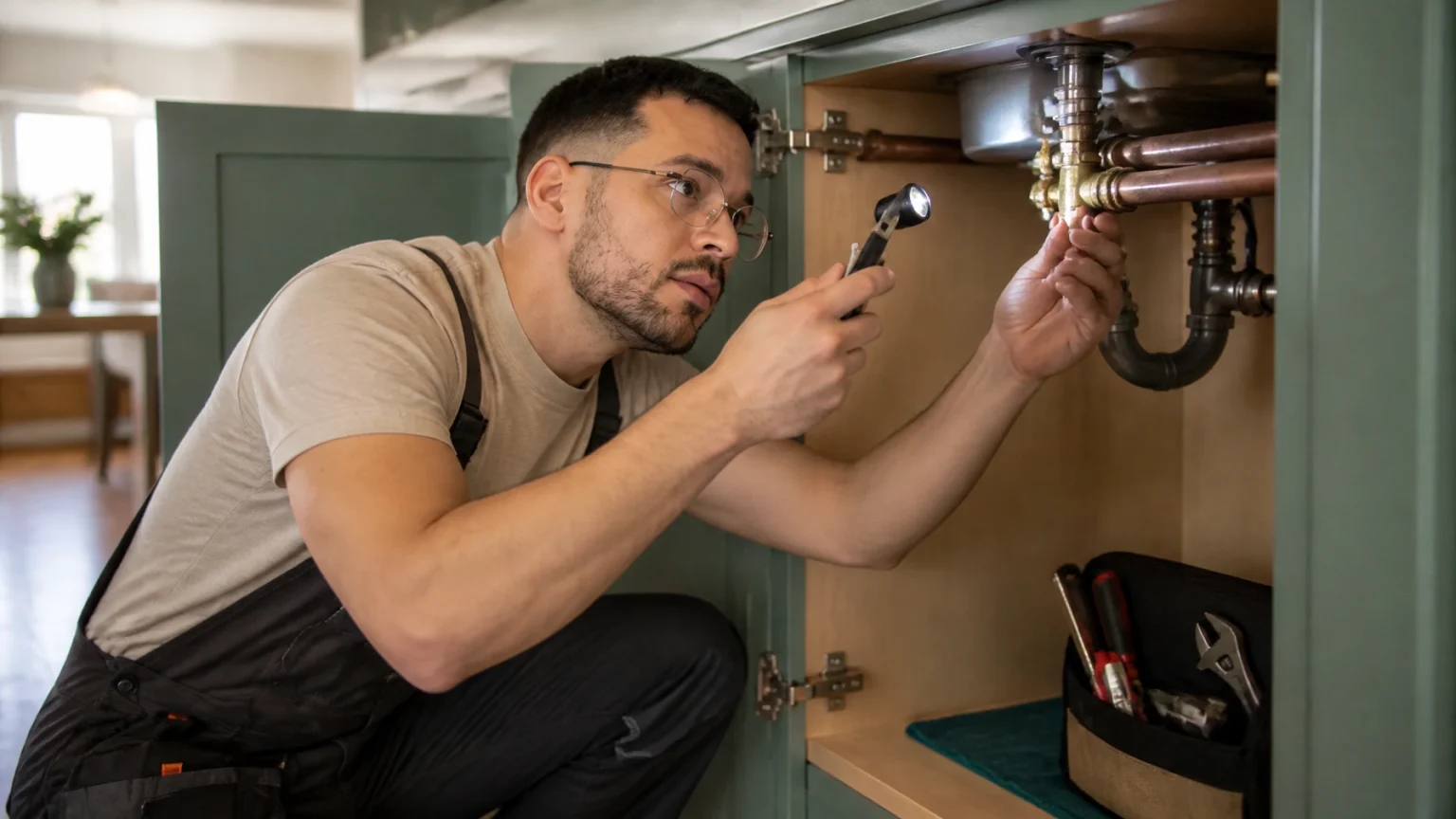
Winter can be hard on a home’s plumbing system. When water freezes, it expands and creates pressure inside pipes. Even a small crack can lead to serious leaks, water damage, and an expensive emergency repair.
The good news is that most winter plumbing problems are preventable. A careful inspection before the first freeze gives you time to address weak points with precision and confidence.
Use this eight-point checklist to prepare your home. If you discover a leak, damaged fitting, inaccessible pipe, or complicated system, book a verified home maintenance professional through Jobsido.
1. Locate And Test Your Main Water Shutoff Valve
Start by finding the main water shutoff valve. It is commonly located where the main water line enters your home, near the water heater, in the basement, or inside the garage.
Turn the valve carefully to confirm that it moves. Do not force it if it is stuck or corroded. Make sure everyone in your household knows where it is and how to close it in an emergency.
A working shutoff valve can help limit damage if a pipe bursts. Once the water is off, you can contact a qualified professional without allowing the leak to continue unchecked.
While inspecting the main valve, look for:
- Corrosion around the valve or fittings
- Moisture, mineral deposits, or active dripping
- A handle that is difficult to turn
- Pipes that are unsupported or under strain
- Obstructions that could prevent quick access
If the valve is damaged or inaccessible, have it assessed before winter arrives. A handyman or home maintenance expert can often help with access and minor repairs, while a licensed plumber should handle water-line work.
2. Winterize Outdoor Faucets And Hoses
Outdoor plumbing is among the most exposed parts of your water system. Before temperatures drop below freezing, disconnect every garden hose, drain it, and store it indoors or in a protected area.
Next, close the indoor shutoff valve supplying each outdoor faucet, if your home has one. Open the outdoor faucet afterward to drain any remaining water from the line. Leave the exterior faucet open if recommended for your system so water has room to expand.
Inspect each hose bib for:
- Cracked or split housings
- Loose connections
- Persistent dripping
- Damaged washers
- Signs of previous freeze damage
Install insulated faucet covers on exterior spigots, particularly if you have older fixtures or pipes that run through an exterior wall.

Do not overlook irrigation lines, pool plumbing, or outdoor water features. These systems may require specialized draining or blowout procedures. Follow the manufacturer’s instructions, or schedule a professional winterization service.
3. Inspect Insulation On Exposed Pipes
Walk through the areas where pipes are most vulnerable to cold air. This includes:
- Basements
- Crawl spaces
- Attics
- Garages
- Utility rooms
- Cabinets beneath sinks
- Pipes along exterior walls
- Areas near windows, foundations, or vents
Look for bare sections of pipe, compressed insulation, or gaps around existing sleeves. Both copper and plastic pipes can freeze, so do not assume one material is automatically protected.
Add purpose-made foam sleeves or other suitable insulation to exposed water lines. Insulate both hot and cold water pipes where appropriate, especially in unheated spaces.
Heat tape or thermostatically controlled heat cable may be useful for especially vulnerable sections. Only use products approved for the specific application, and follow the manufacturer’s installation instructions carefully. If you are unsure whether a product is safe for your plumbing, ask a verified expert before installing it.
The Michigan government recommends insulating pipes in crawl spaces and attics, while the American Red Cross also identifies garages, basements, cabinets, and exterior walls as common risk areas. You can review their frozen pipe prevention guidance for additional safety information.
4. Seal Drafts Around Plumbing Penetrations
Insulation protects pipes, but cold drafts can undermine it. Inspect where plumbing enters walls, floors, foundations, and cabinets.
Look for gaps around:
- Water supply lines
- Drainpipes
- Electrical wiring
- Dryer vents
- Foundation openings
- Crawl-space access doors
- Basement windows
- Exterior wall penetrations
Seal small gaps with appropriate caulk or insulation. Larger openings may require a more durable repair. Close foundation vents and ensure access panels fit securely, while maintaining any ventilation required for your home and appliances.
The goal is simple: keep cold air out and warm air around your plumbing. A small opening can expose a pipe to enough cold air to increase the risk of freezing during a severe weather event.
If you notice foundation cracks, recurring drafts, or inaccessible pipe runs, arrange an inspection rather than applying a temporary fix that may not last.
5. Review Heating And Indoor Airflow
Your heating system is part of your plumbing protection plan. Confirm that your thermostat is working accurately and that warm air can circulate through rooms containing water lines.
During cold weather:
- Keep the home heated consistently
- Avoid turning the heat off when you leave
- Keep garage doors closed
- Open cabinets beneath kitchen and bathroom sinks
- Move household chemicals out of children’s reach
- Keep vents and registers clear
- Check that rooms with plumbing are not unusually cold
If you are away for several days, many public agencies recommend keeping the thermostat at no lower than 55°F (13°C). Some regional guidance recommends maintaining 60°F (15°C), particularly during more severe cold. Follow local utility and building recommendations for your area.
Opening cabinet doors during a cold snap allows warmer indoor air to reach pipes installed against exterior walls. In unusually low temperatures, a slight drip from a vulnerable faucet may also help maintain water movement. Use this measure thoughtfully and follow local guidance.
6. Check Your Water Heater And Connected Equipment
Winter is a good time to inspect the water heater and other appliances connected to your plumbing system.
Look for:
- Water pooling near the base
- Rust or corrosion
- Dampness around supply connections
- Damaged insulation
- Unusual noises
- Exposed pipes in a cold utility space
- A pressure relief pipe that appears obstructed
Do not adjust gas controls, electrical connections, or safety components unless you are qualified to do so. A professional can inspect the system and identify issues before they become disruptive.
If your home will be vacant or seasonally occupied, winterization may involve shutting off the water supply, draining pipes, and turning off or adjusting the water heater. The correct procedure depends on your equipment and property. Never place antifreeze in drinking-water lines unless a qualified professional specifically directs you to use an approved product for that application.
7. Inspect Drains, Traps, And Low-Use Fixtures
Most occupied homes do not need to be fully drained for winter. However, low-use fixtures and plumbing in unheated spaces deserve attention.
Check floor drains, sinks, tubs, showers, toilets, and utility sinks in basements, garages, cabins, or other areas that may become cold. Confirm that traps are not dry and that fixtures are protected from freezing temperatures.
If you are closing a seasonal property, complete winterization may require:
- Shutting off the main water supply
- Draining supply lines
- Flushing toilets
- Protecting traps with an appropriate plumbing antifreeze
- Preparing water heaters, pumps, and softeners
- Following local or manufacturer instructions
This work can be more involved than it appears. If the system includes a well, septic tank, sprinkler system, pool, or specialized equipment, schedule a professional service to reduce the risk of incomplete drainage or equipment damage.
8. Prepare For A Frozen Or Burst Pipe
Even a well-maintained home can experience a plumbing emergency during extreme weather. Prepare your response before you need it.
Keep these items accessible:
- Towels and buckets
- Pipe insulation
- A flashlight
- A hair dryer
- Emergency contact information
- The main shutoff valve key or tool, if required
If a faucet produces only a trickle, suspect a frozen pipe. Keep the faucet open and apply gentle heat with a hair dryer or an approved heating pad. Never use a torch, open flame, kerosene heater, propane heater, or charcoal device to thaw a pipe.
If there is standing water, do not use electrical appliances nearby. If you cannot locate the frozen section, the pipe is inaccessible, or water begins leaking, shut off the main valve and call a licensed plumber.
For more detailed winter preparation and emergency advice, review the City of Portland’s plumbing winterization guide and Peel Region’s outdoor pipe checklist.
Make Winter Preparation A Priority
A plumbing inspection before winter is a practical investment in your home’s comfort, safety, and long-term value. By testing shutoff valves, draining outdoor lines, insulating exposed pipes, sealing drafts, and preparing for emergencies, you can approach the season with greater confidence.
Some tasks are simple, while others require specialized knowledge. Jobsido makes it easy to search for home construction and maintenance professionals, compare verified experts, check reviews, and schedule service around your availability.
Search for the right professional, schedule an inspection, complete your winter preparation, and enjoy a warmer season with precision and peace of mind.